


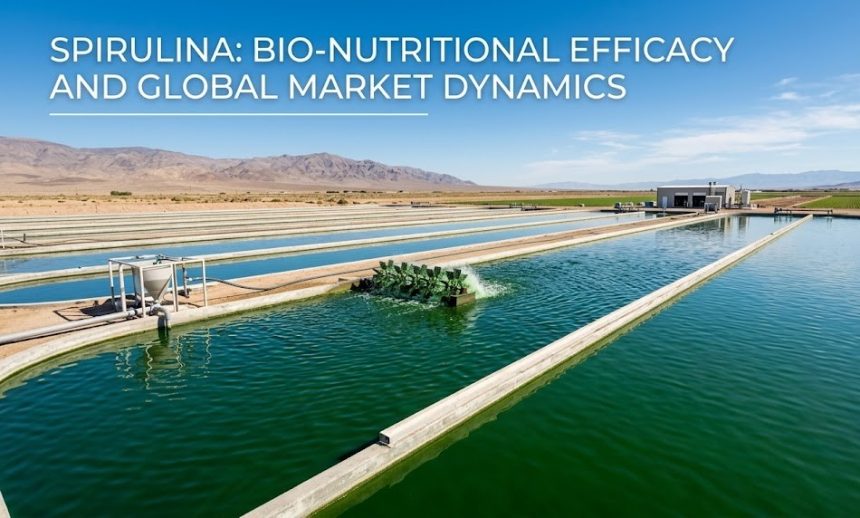
In the global wellness and nutraceutical sectors of 2026, the adoption of high-density superfoods has become a foundational strategy for metabolic optimization and disease prevention. For individuals and health-conscious consumers, Spirulina (Arthrospira platensis) offers a highly efficient, multi-nutrient alternative to traditional synthetic supplements. This intelligence brief deconstructs the technical mechanics, economic advantages, structural vulnerabilities, and procurement benchmarks associated with daily spirulina consumption.
Technical Mechanics: The Phycocyanin-Protein Matrix
Spirulina operates on a principle of biological high-density nutrient pooling. As a cyanobacterium, it is engineered to house an extraordinary concentration of functional compounds—ranging from 57% to 70% protein by dry weight—making it one of the most resource-efficient protein sources on the planet.
- Nutrient Density and Resource Allocation: Every gram of spirulina delivers a comprehensive array of B-vitamins (Thiamin, Riboflavin, Niacin) and essential minerals like iron and manganese. Its primary active component, phycocyanin, serves as a powerful antioxidant that scavenges free radicals and inhibits cyclooxygenase-2 (COX-2) activity, effectively reducing systemic inflammation at a cellular level.
- The Metabolic Analogy: Operationally, spirulina functions as a metabolic “utility provider.” It allocates specific compounds to enhance phagocytosis in macrophages while simultaneously inducing cellular and humoral adaptive immunity. Much like a centralized power grid, daily intake stabilizes blood glucose by increasing insulin sensitivity and optimizing the lipid profile by reducing low-density lipoprotein (LDL) cholesterol.
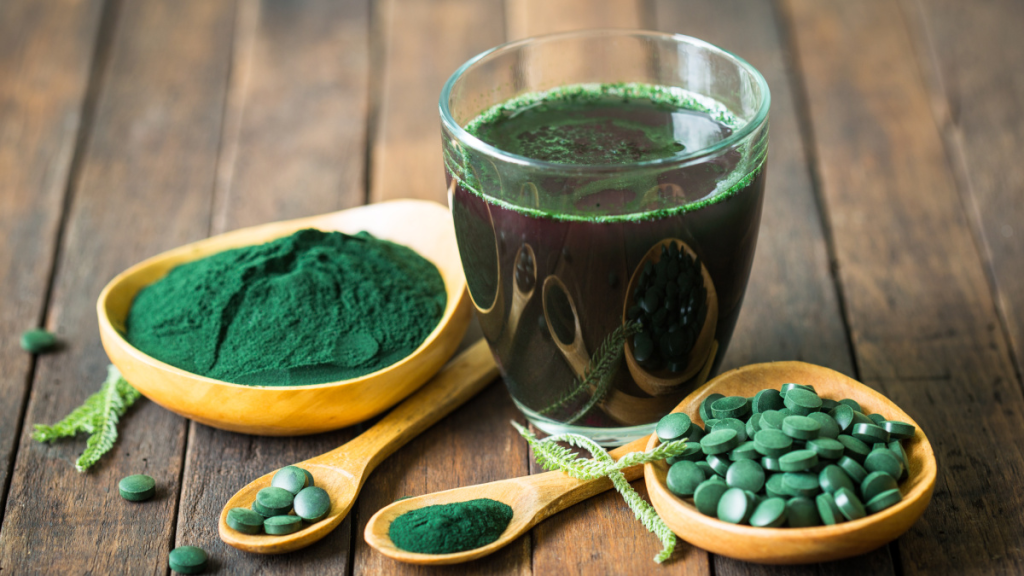
- Operational Control: Bioavailability and Intake: Users manage their nutrient uptake through standardized delivery formats—primarily powders, tablets, and capsules. Because spirulina lacks a cellulose cell wall, its nutrients are highly bioavailable, allowing for immediate intestinal absorption without requiring complex digestive enzymatic breakdown, making it accessible even for those with compromised digestive tracts.
Economic Impact and Procurement Logistics
From a financial perspective, spirulina is a high-growth asset within the functional food market. The global spirulina market is estimated to be valued at approximately $710.4 million in 2026, with a projected compound annual growth rate (CAGR) of 6.2% to 8.0% through 2033. When procuring spirulina, operators must evaluate strict purity benchmarks over simple pricing:
- Market Growth and Regional Tiers: North America currently holds the dominant market share (37.2%), driven by premium health supplement demand. However, the Asia-Pacific region is the fastest-growing hub, fueled by government initiatives promoting sustainable nutrition and a rising middle-class focus on immunity-boosting nutraceuticals.
- Procurement Volatility and Form Factors: The market is bifurcated between raw powder (46.5% market share) and processed tablets. Prices for premium Organic Spirulina vary significantly, with high-purity extracts like “Blue Spirulina” (Phycocyanin) commanding a 20-25% sales premium due to their use as natural colorants and concentrated antioxidants.
- Baseline Security: Heavy Metal Screening: High-quality providers must supply rigorous laboratory certificates of analysis (COA). Because spirulina is a “bio-accumulator,” it can absorb heavy metals (lead, mercury, arsenic) from its growth environment. Procurement must prioritize closed-loop photobioreactor or regulated pond systems to ensure consumer safety and regulatory compliance.
Structural Vulnerabilities and Strategic Limitations
While biologically highly efficient, the daily intake of spirulina introduces specific operational frictions and biological limitations that scale with dosage.
- The “Bad Neighbor” Effect: Contamination and Toxins: Because spirulina shares aquatic environments with other microorganisms, poor cultivation practices can lead to contamination with cyanotoxins (like microcystins) or hepatotoxic bacteria. These “bad neighbors” can cause liver damage or acute gastrointestinal distress if the source is not strictly regulated.
- Genetic and Metabolic Vulnerabilities: Spirulina contains phenylalanine, making it a catastrophic risk for individuals with the rare genetic disorder Phenylketonuria (PKU). Additionally, its high protein and nucleic acid content can place significant metabolic strain on individuals with renal insufficiency or those prone to gout.
- The B12 Fallacy: A critical structural limitation is spirulina’s lack of active Vitamin B12. While often marketed to vegans, spirulina predominantly contains pseudovitamin B12, which is biologically inactive in humans. Relying on spirulina as a sole B12 source can lead to undetected neurological deficiencies over time.
Conclusion
The strategic verdict for 2026 is that daily spirulina supplementation remains one of the most capital-efficient methods for enhancing immune resilience and cardiometabolic health. It successfully offloads the complexity of diverse nutrient sourcing into a single, plant-based superfood. However, it is not a “plug-and-play” solution for everyone. Consumers must continuously monitor their source purity and be prepared to cross-supplement with active Vitamin B12 if adhering to a vegan protocol. For maximum ROI on health, the “Smart Move” is to invest in third-party tested, organic-certified tablets to bypass the risks of heavy metal toxicity.
Also Read : Vitamin D Myths vs. Facts: The 2026 Comprehensive Intelligence Brief